A Deep Dive into the Technologies Empowering Full Stack Development
Full stack development relies on a versatile range of tools and frameworks that unify the front-end and back-end processes. These technologies help developers craft seamless digital experiences by enabling smooth interface design, reliable server operations, and efficient data management. With the right combination of tools, developers can build scalable, high-quality applications suited for today’s fast-paced digital environment. Kickstart your tech career with a Full Stack Developer Course in Chennai and gain hands-on expertise in both front end and back end development to become industry-ready.
Front-End Technologies for Delivering Interactive Experiences
Front-end development revolves around creating user-friendly and visually appealing interfaces. By using HTML, CSS, JavaScript, and modern frameworks, developers can design responsive layouts and intuitive interactions. These technologies make it easier to produce interfaces that feel clean, smooth, and consistent across screen sizes and platforms.
Back-End Technologies for Managing Application Logic
The back end handles essential behind-the-scenes operations such as data handling, request processing, and authentication. Frameworks like Node.js, Django, and Ruby on Rails provide developers with secure and efficient structures for building dependable server environments. These tools ensure stable communication between the interface, server, and data layers.
Popular Front-End Tools and Frameworks
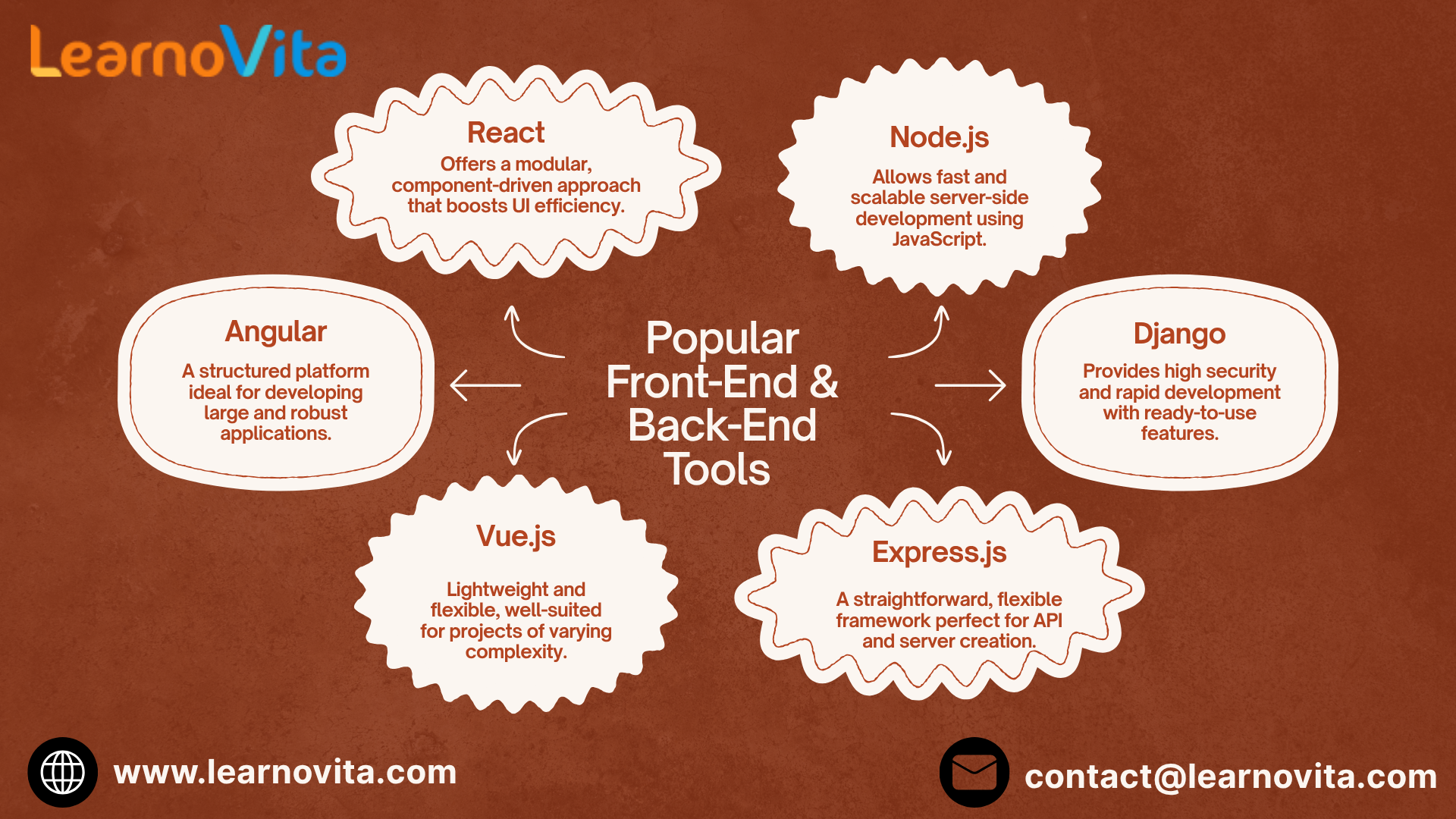
React: Offers a modular, component-driven approach that boosts UI efficiency.
Angular: A structured platform ideal for developing large and robust applications.
Vue.js: Lightweight and flexible, well-suited for projects of varying complexity.
Reliable Back-End Tools and Frameworks
Node.js: Allows fast and scalable server-side development using JavaScript.
Django: Provides high security and rapid development with ready-to-use features.
Express.js: A straightforward, flexible framework perfect for API and server creation.
Advance your career with a Full Stack Developer Course Online and master front end and back end technologies from anywhere at your own pace.
Database and Storage Technologies
Every full stack application depends on solid data management. Relational systems like PostgreSQL and MySQL provide structured and stable storage, while NoSQL databases such as MongoDB offer adaptability for projects that handle evolving or unstructured data. These tools help maintain performance, reliability, and scalability.
Tools Enhancing Workflow and Version Control
Effective development depends on smooth collaboration and organized code management. Git and GitHub make it easy to track updates, manage versions, and coordinate teamwork. Tools like Docker and various package managers add efficiency by simplifying deployments and handling dependencies with ease.
Conclusion
Full stack development thrives on the strength of modern tools and frameworks that bridge front-end creativity with back-end logic. By mastering these technologies, developers can build applications that are secure, scalable, and visually engaging. As digital demands continue to grow, these tools remain vital in shaping polished and high-performing user experiences.